

 News
News
July 14, 2026

We offer trusted probate advice, managing estates with care, privacy, and efficiency.
Visit Private Client Services

Click here to download our brochure.

Finders International work with councils, coroners, hospitals, housing associations and care homes across the UK and Ireland. We assist with tracing heirs to property, estates, assets and unclaimed funds, as well as locating next of kin to arrange and attend funerals.
Visit Public Sector Services

Click here to download our brochure.

Specialist probate insurances to protect executors, trustees, and estate assets.
Visit Insurances with Aviva


Discover how we identify heirs and next of kin, including distant or unknown relatives.
Find out more


See how we support legal professionals with expert heir tracing and estate solutions. Download the brochure to learn more.

Find out how we help councils and public bodies trace next of kin and manage estates. Download the brochure to learn more.


 News
News

When someone passes away, one of the most common questions beneficiaries, executors and administrators have is, “How long will the estate take to settle?”
Every estate is different. Timescales vary depending on the complexity of the estate, tax requirements, property sales and how quickly third parties respond.
While some estates are completed sooner, most estate administrations take between 12 and 24 months from start to finish. Some Irish estates may take up to 36 months where additional complexity or statutory requirements apply.
This guide explains the typical stages involved in administering an estate in both the UK and Ireland and the factors that can affect timescales.
Before an estate can be distributed, all beneficiaries must be identified and verified.
Finders International assists solicitors, executors, administrators and other professionals by:
Once beneficiaries have been identified and verified, the estate administration process can continue through the stages outlined below.
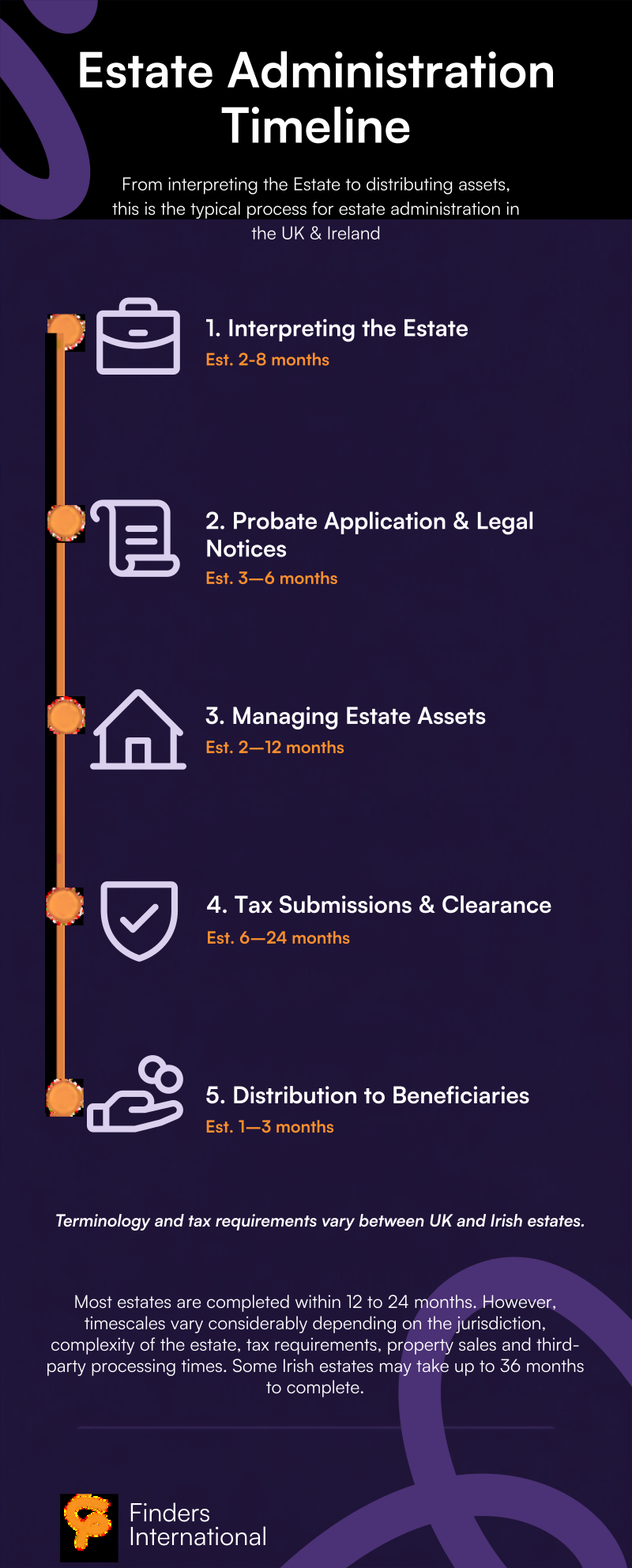 The Estate Administration Timeline
 1. Investigating the Estate
Estimated timeframe: 2 to 8 months
The first stage involves gathering information about the estate and establishing exactly what assets, liabilities and obligations exist.
This may include:
Tax terminology differs slightly between jurisdictions:
2. Probate Application and Legal Notices
Estimated timeframe: 3 to 6 months
Once sufficient information has been gathered, an application can be submitted for the legal authority needed to administer the estate.
This generally involves:
The terminology used differs slightly:
| UK | Ireland |
| Grant of Representation | Grant of Probate or Grant of Administration |
| Court | Probate Office |
Timescales can vary depending on the complexity of the estate and court or probate office processing times.
3. Managing Estate Assets
Estimated timeframe: 2 to 12 months
After probate has been granted, the estate’s assets can begin to be collected and administered.
This may include:
Where property forms part of the estate, conveyancing can significantly impact overall timescales.
4. Tax Submissions and Clearance
Estimated timeframe: 6 to 24 months
Before an estate can be distributed, its tax affairs must be finalised.
This can involve:
Tax clearance requirements differ between jurisdictions:
5. Distribution to Beneficiaries
Estimated timeframe: 1 to 3 months
Once legal, financial and tax matters have been resolved, the estate can be distributed.
This typically involves:
At this stage, the administration process is generally nearing completion.
Most estates are completed within 12 to 24 months, although more complex estates can take longer.
Some Irish estates may take up to 36 months due to factors such as Probate Office processing times, tax clearance requirements and estate complexity.
Several factors can affect estate administration timescales, including:
No two estates are exactly the same, which is why timelines should always be treated as guidance rather than guaranteed deadlines.
What Happens If There Is No Will?
Where a person dies without leaving a valid Will, their estate is distributed according to intestacy rules.
These rules determine who can inherit and in what order of priority.
Who Pays the Costs?
Legal and administration costs associated with the estate are normally paid from estate funds before distributions are made to beneficiaries.
Beneficiaries are not personally responsible for the deceased’s debts or administration expenses.
Who Settles Outstanding Debts?
Before any distribution can take place, the estate’s personal representative must settle valid debts using estate funds.
This may be:
Finders International helps solicitors, executors, administrators and private clients locate missing beneficiaries, verify family trees and support estate administration throughout the UK, Ireland and internationally.
Looks like you’re on the UK site, choose another location to see content for you.