Insights
October 26, 2026
We offer trusted probate advice, managing estates with care, privacy, and efficiency.
Visit Private Client Services

Visit Public Trustee Services


Discover how we identify beneficiaries and next of kin, including distant or unknown relatives.
Find out more


See how we support legal professionals with expert heir tracing and estate solutions. Download the brochure to learn more.
Find out more


 Insights
November 2, 2026
Insights
October 26, 2026
Insights
August 24, 2026


 Insights

When someone needs to be located, it can be tempting to think that probate genealogy and skip tracing are essentially the same service.
Both may involve finding people. But in an estate matter, finding someone is only one part of the process.
Probate genealogy requires a much deeper level of research and verification. It is not simply about answering “Where is this person?” It may also involve questions such as:
For lawyers administering estates, that distinction can be important.
Skip tracing is generally focused on locating an individual whose current whereabouts are unknown.
That can be extremely useful in the right circumstances. If you already know exactly who you are looking for and simply need to establish their current location or contact details, a tracing service may be appropriate.
Probate work, however, can present a different challenge.
Sometimes the issue is not just where a beneficiary is. It is establishing who is entitled in the first place.
That is where probate genealogy comes into its own.
A professional probate genealogist researches family relationships in the context of an estate.
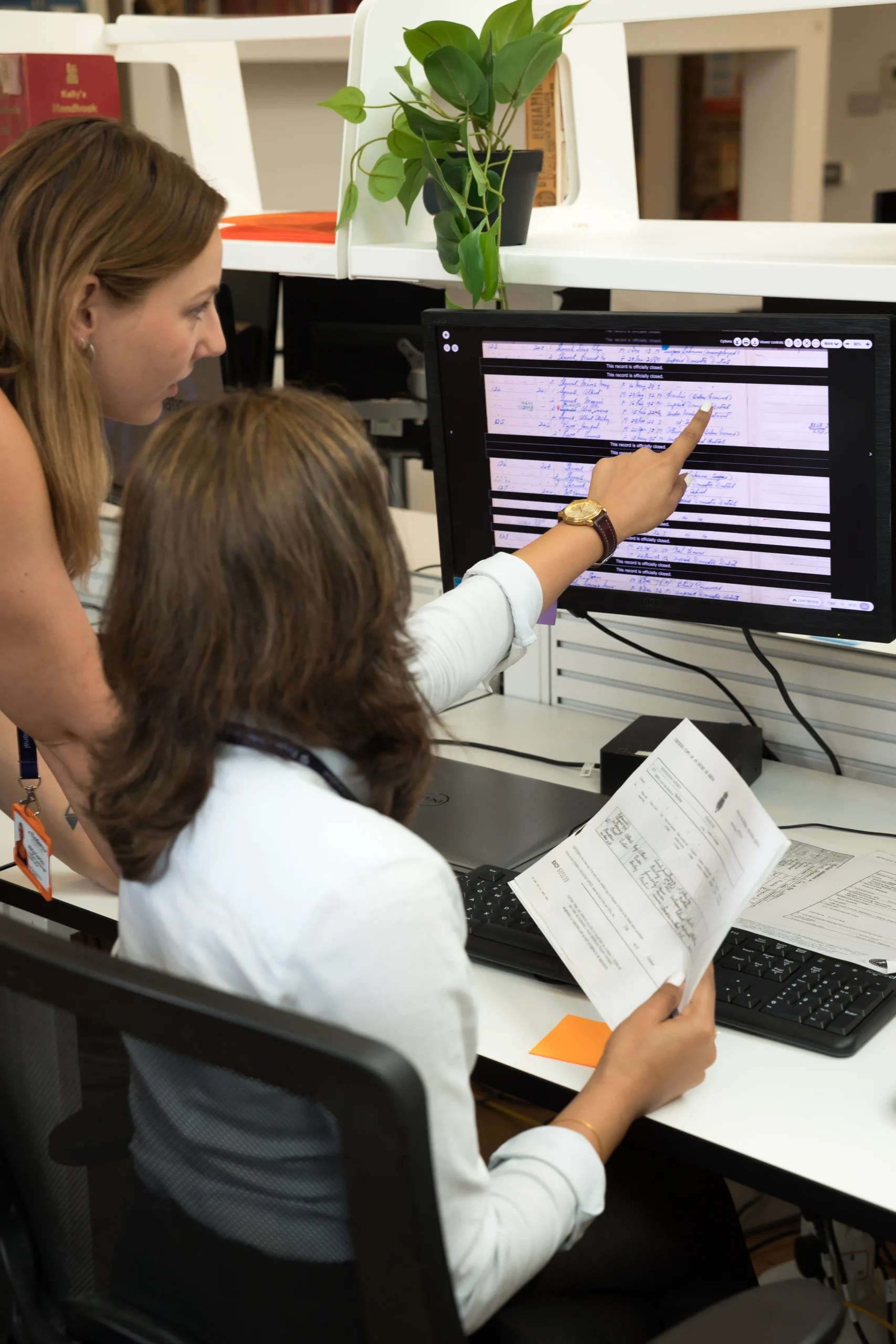
That can mean reconstructing family trees, identifying previously unknown relatives, tracing individuals across different jurisdictions and obtaining documentary evidence to support the findings.
The purpose is not simply to produce a list of possible relatives. It is to provide lawyers with a clearer, evidence-based picture of the family and potential beneficiaries.
For example, an initial search might identify someone who appears to be the deceased’s nephew. A probate genealogist would not normally stop at locating that individual.
The research may need to establish the relationship through the relevant generations, investigate whether other relatives have an equal or prior claim, and obtain records or other appropriate evidence to support the conclusions reached.
That difference becomes particularly important when the estate is relying on the research to determine who should receive a distribution.
In estate administration, an incorrect assumption can have consequences.
A family tree supplied by relatives may be a very useful starting point, but memories can be incomplete. Family members may have lost contact, relationships can span several countries and generations, and relatives may simply be unaware that another branch of the family exists.
This is why verification matters as much as tracing.
At Finders International, our role is not simply to find a name and an address. Our probate genealogy work is designed to investigate the wider family picture and provide supporting evidence for our findings.
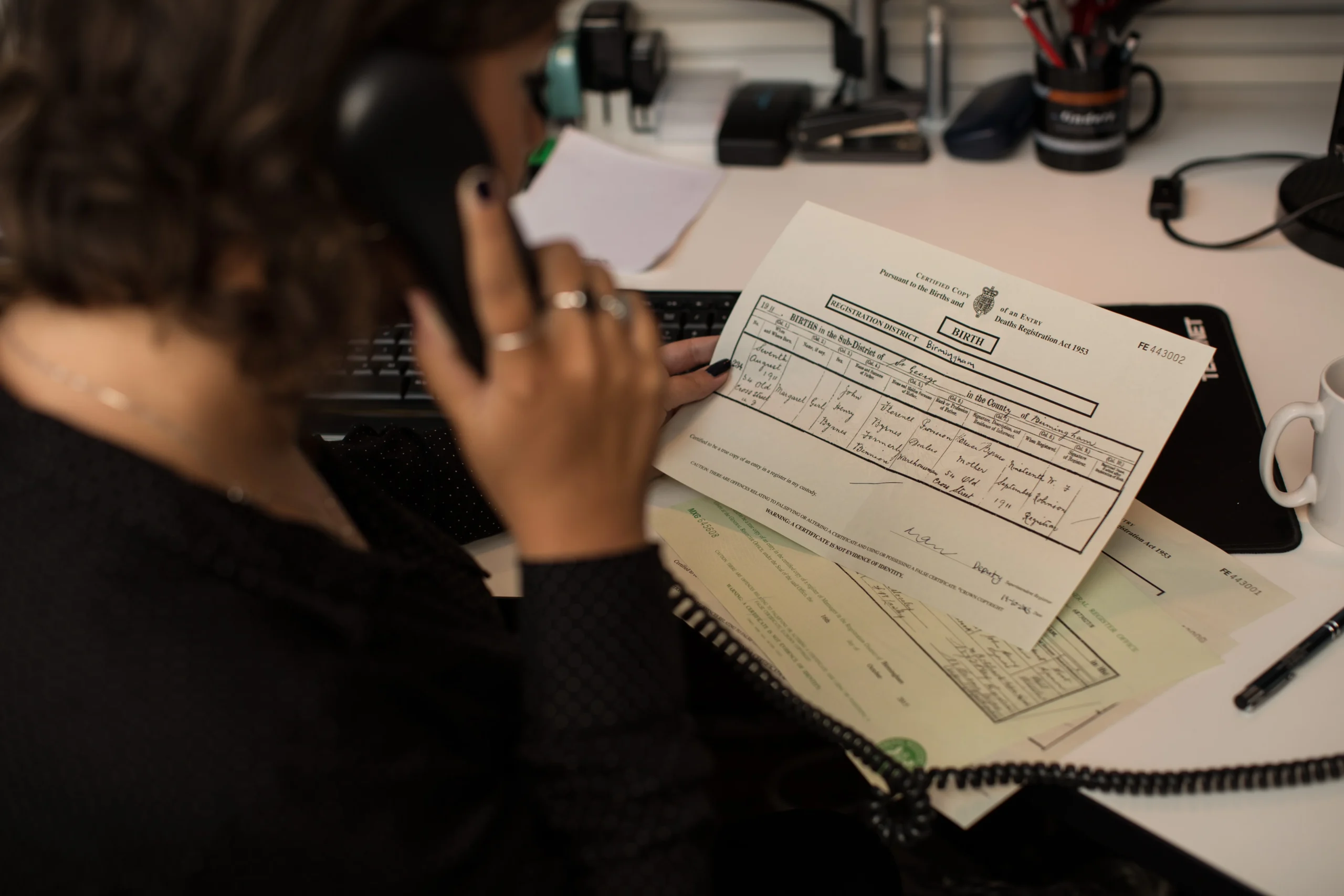
Depending on the circumstances of the estate, this can include examining civil registration and other genealogical records, researching different branches of a family, tracing relatives internationally and obtaining documentation to substantiate relationships.
It is this combination of research, tracing and verification that makes probate genealogy a specialist discipline.
Probate genealogy is rarely as straightforward as following a single line on a family tree.
Names can change. Records can be incomplete or inconsistent. Families move between jurisdictions. Multiple people can share the same or similar details. A seemingly obvious family connection can turn out to be incorrect once the underlying records are examined.
An experienced probate genealogist knows not only where to look, but how to test the information found.
For lawyers, that provides something much more useful than simply knowing that a person has been located. It provides an evidence trail that can help inform decisions about the administration and distribution of the estate.
Specialist probate genealogy can be particularly useful where:
In these situations, the question is bigger than “Can this person be found?”
It becomes:
“Can we establish who the correct people are, how they are related to the deceased, and provide evidence to support those findings?”
That is the difference probate genealogy can make.
Skip tracing and probate genealogy both have their place.
But where the outcome of the research may influence the distribution of an estate, location alone may not provide the level of assurance required.
Specialist probate genealogy combines tracing with detailed family research, documentary evidence and verification, helping lawyers move from finding someone to establishing who they are and why they may be entitled.
And in complex estate administration, that distinction matters.
Further Reading
The Importance of Verification: https://www.findersinternational.com/au/verify-before-you-distribute-au
 Insights
What appeared to be a straightforward estate administration matter quickly became something far more…
October 26, 2026
Looks like you’re on the Australian site, choose another location to see content for you.