
 Insights
November 2, 2026

We offer trusted probate advice, managing estates with care, privacy, and efficiency.
Visit Private Client Services
Visit Public Trustee Services


Discover how we identify beneficiaries and next of kin, including distant or unknown relatives.
Find out more


See how we support legal professionals with expert heir tracing and estate solutions. Download the brochure to learn more.
Find out more


 Insights
November 6, 2026
Insights
November 2, 2026
Insights
October 26, 2026


 Insights

When you cannot identify or locate a beneficiary, administering an estate quickly becomes more complex.
Executors and their legal advisers need to show that they have made appropriate enquiries before deciding what to do next. In difficult cases, they may need to apply to the court for a Benjamin Order or consider the relevant arrangements for unclaimed funds.
But before taking that step, specialist probate genealogy undertaken on a contingent fee basis may offer another route.
For suitable cases, Finders International can undertake the research without charging the estate an upfront research fee. This allows the investigation to follow the evidence without requiring the estate to fund potentially extensive enquiries at the outset.
A missing beneficiary is not necessarily untraceable.
They may have moved interstate or overseas, changed their name, lost contact with their family or simply be unaware of their entitlement. In other cases, the challenge lies not in finding a known individual, but in establishing who is actually entitled to inherit.
This is where specialist probate genealogy differs from skip tracing.
Skip tracing focuses primarily on locating a known individual. Probate genealogy goes further. It combines tracing, family-tree research and documentary verification to establish who may be entitled, their relationship to the deceased and the evidence supporting that relationship.
As we explain in our Probate Genealogy vs Skip Tracing guide, finding someone can be only the first step. Where an estate depends on establishing or verifying entitlement, lawyers may need a more detailed genealogical investigation.
That distinction becomes particularly important when assessing whether all reasonable avenues for finding a missing or unknown beneficiary have been explored.
If appropriate enquiries fail to locate a beneficiary, an Australian court may, depending on the circumstances and jurisdiction, make a Benjamin Order that allows the executor to distribute the estate on the basis set out in the order.
The extent of the enquiries already undertaken will form an important part of that decision.
Australian cases have considered whether further searches would serve a useful purpose when weighed against the additional cost and delay. The requirements will depend on the individual estate and jurisdiction, so legal advisers will need to consider whether a court application is appropriate.
Court proceedings can, however, add further cost, administration and delay to an already complex estate.
Before reaching that stage, lawyers can consider whether specialist probate genealogy could take the search further.
Under Finders International’s contingent model:
This approach allows the research to follow the evidence without restricting the investigation to an estate-funded research budget.
And the objective goes beyond finding a name or address. Verification sits at the heart of probate genealogy.
Our researchers can test family information, investigate relevant branches of the family and gather documentary evidence to support the relationships identified.
An unsuccessful search can still provide valuable evidence.
The research creates a record of the searches undertaken, the information considered and the outcome of those enquiries. Lawyers can then take that evidence into account when advising the executor on the next appropriate step.
Depending on the circumstances, that evidence may also assist if the executor subsequently seeks directions or protection from the court.
Rather than starting again, the executor and their advisers have a documented record of the avenues already investigated.
If the estate cannot pay an entitlement because it cannot identify or locate a beneficiary, the funds may remain unresolved, subject to the law and unclaimed-money regime that applies in the relevant Australian jurisdiction.
The rules and time periods vary between jurisdictions.
For lawyers administering the estate, however, there is a more immediate question:
Have we explored every reasonable avenue for identifying and locating the beneficiary before moving to the next stage?
Specialist research gives lawyers and executors a proactive way to address that question.
How you fund the beneficiary search can also affect the estate.
With a traditional fixed-fee investigation, the estate may bear the research costs. As a search becomes more complex, particularly when it involves international enquiries, those costs can increase.
A contingent arrangement works differently.
Finders undertakes the agreed research at its own financial risk and seeks its fee under the terms of the contingent arrangement when it successfully identifies and locates an entitled beneficiary.
This allows complex research to continue without repeatedly asking the executor to approve additional research expenditure.
This approach can be particularly useful where:
Finding someone does not prove their entitlement.
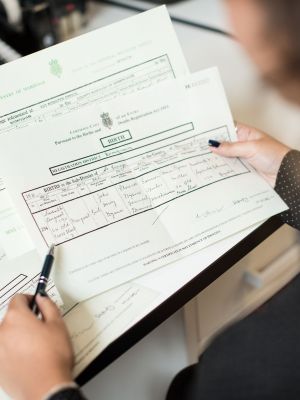
A name, address or apparent family connection only forms part of the evidence. Before distributing an estate, lawyers may need reliable evidence that establishes an individual’s relationship to the deceased and helps identify whether other potentially entitled relatives exist.
Specialist probate genealogy combines tracing with family-tree research and documentary verification.
Depending on the case, this can involve investigating different branches of a family, resolving conflicting information, obtaining relevant certificates and records, and conducting enquiries across several jurisdictions.
For complex estates, this work provides much more than a successful trace. It can provide an evidenced family history that helps lawyers determine the next stage of the estate administration.
Benjamin Orders and statutory unclaimed-money processes remain important options where beneficiaries genuinely cannot be identified or located.
But they do not always have to be the starting point.
Where viable avenues for genealogical research remain, instructing a specialist on a contingent basis allows lawyers to explore them without asking the estate to fund an open-ended investigation.
If the research locates beneficiaries, it can help establish and verify their connection to the deceased.
If it doesn’t, the research creates a documented record of the enquiries undertaken, which may help the executor and their advisers decide how to proceed.
For lawyers dealing with missing or unknown beneficiaries, specialist probate genealogy therefore offers more than a tracing service. It can help establish the facts, verify the evidence and provide a clearer route towards resolving the estate.
Finders International provides specialist probate genealogy and beneficiary tracing services across Australia and internationally.
We work with legal professionals on cases ranging from locating a single missing beneficiary to reconstructing and verifying complex family trees across multiple jurisdictions.
Where appropriate, we can undertake cases on a contingent fee basis, giving lawyers and executors another option when they cannot easily determine the scope or potential cost of the research at the outset.
If you’re dealing with an estate involving a missing or unknown beneficiary, contact our team to discuss the research options available.
 Insights
What appeared to be a straightforward estate administration matter quickly became something far more…
October 26, 2026
Looks like you’re on the Australian site, choose another location to see content for you.